


Is Hotel Technology Making Luxury More Complicated?
June 2026
 Back
Back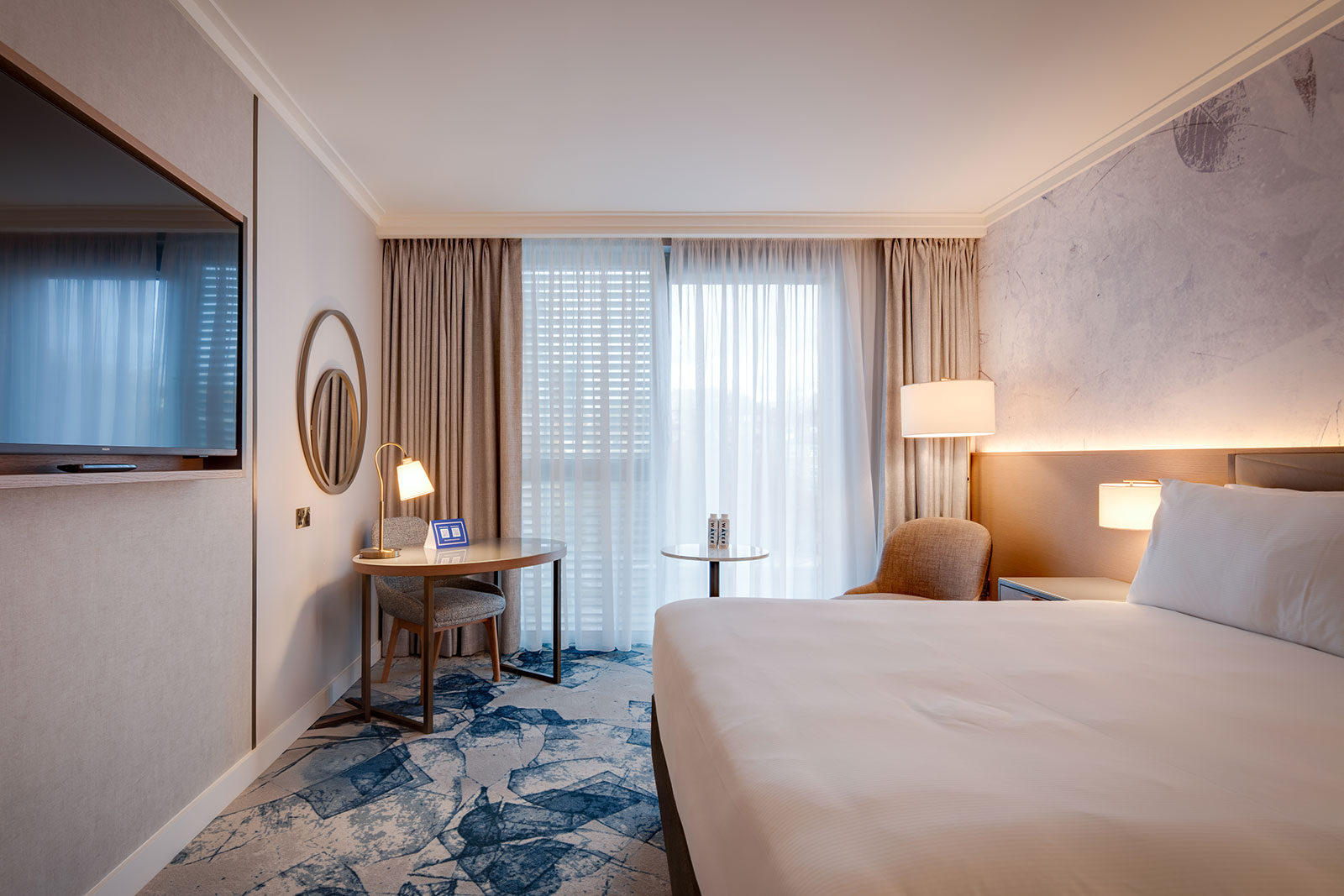
The most advanced technology in a luxury hotel room may be the technology the guest never notices.
The room is already at a comfortable temperature. The lighting is appropriate for the time of day. The blinds, entertainment and room controls respond without delay. Occupancy is recognised, but the guest never feels monitored. Everything works, yet very little demands attention.
That is the promise of the intelligent hotel room. The reality is not always so convincing.
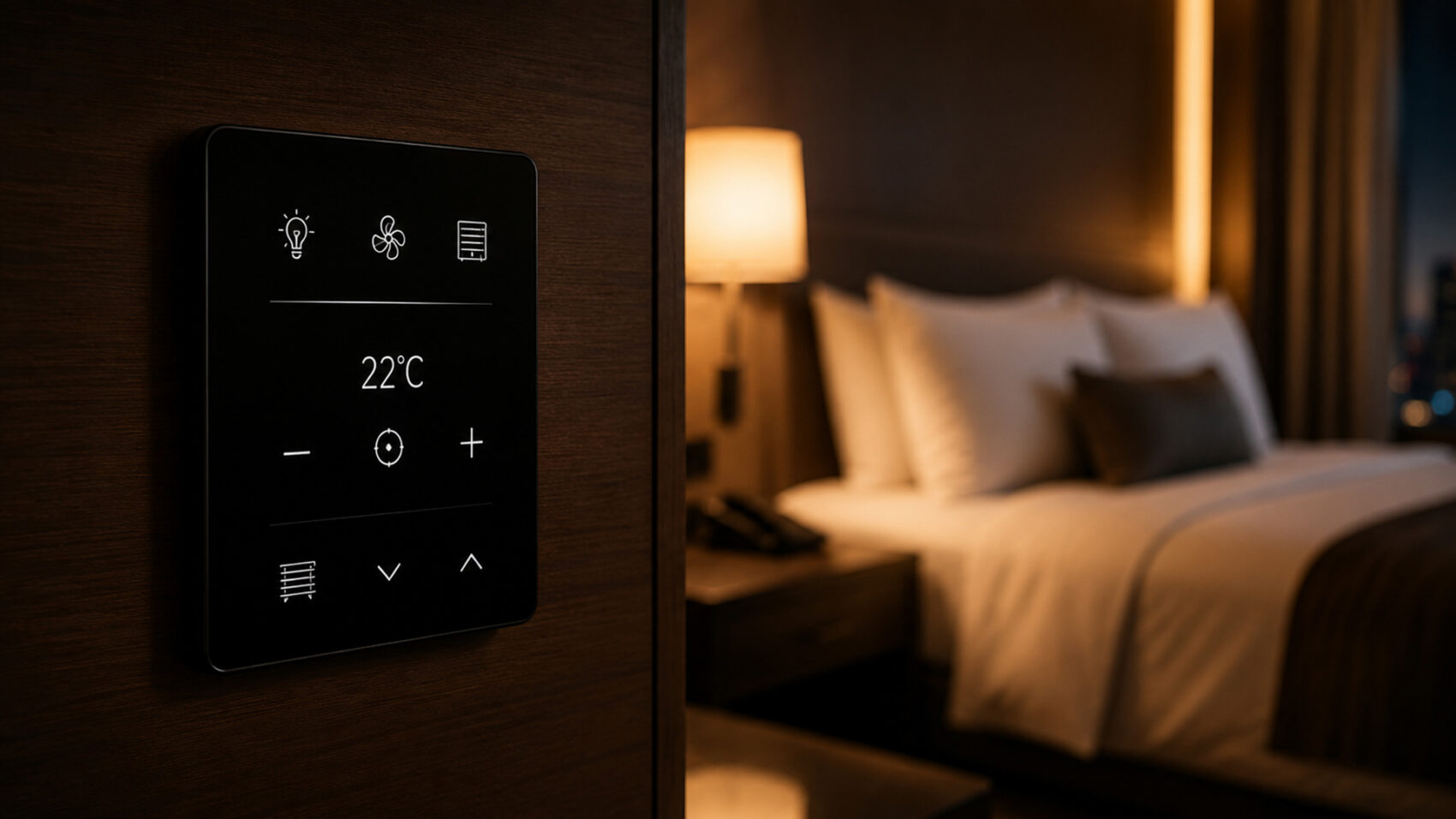
Many travellers will recognise the opposite experience: standing beside the bed pressing several unidentified switches in an attempt to turn off one light. A wall panel may look elegant, but its symbols are unfamiliar. The thermostat appears simple until the guest tries to change it. An app offers complete control, provided the guest downloads it, registers and keeps a phone within reach.
At that point, technology is no longer removing friction. It is creating it.
A more intelligent room or a more complicated one?
Luxury hospitality is reaching an important crossroads.
Across the guest journey, technology is changing everything from mobile check-in and digital room keys to AI-assisted personalisation, voice controls and intelligent energy management. But it is inside the guest room that the tension between greater capability and genuine simplicity becomes most apparent.
Digital platforms can connect the guest room with hotel operations, while sensors can identify occupancy and reduce unnecessary energy use. Future systems may learn more about individual preferences and prepare a room before the guest arrives.
This sounds like progress. However, the industry sometimes confuses greater technical capability with a better guest experience.
A hotel guest should not need instructions to switch off the lights. Yet control layouts and operating logic often vary between hotels and brands, requiring even experienced travellers to relearn the room each time. Nor should basic room functions depend entirely on an app or a reliable internet connection. Luxury should give the guest more control while requiring less effort.
Voice control may offer part of the answer. A simple instruction such as “close the blinds” or “turn off all the lights” is more natural than navigating several control screens. The underlying system can be highly sophisticated while the interaction remains simple.
Voice should not become the only option, however. It may not suit every guest, accent, language or situation. Some guests will also have concerns about privacy, while others will simply prefer a physical switch. The most effective room is therefore unlikely to rely on one interface. It will combine natural voice commands, intuitive controls and reliable manual alternatives.
The room is becoming a connected system
Behind this apparently simple experience, the hotel room is becoming significantly more complex.
Lighting, heating and cooling, access control, blinds, room status and security were once treated largely as separate systems. They are increasingly being connected through a Guest Room Management System, with further links to the Building Management System and the hotel’s Property Management System.
A single “good night” instruction could switch off selected lights, close the blinds, adjust the room temperature and activate do-not-disturb. To the guest, it is one action. Behind the wall, it may involve mechanical systems, electrical controls, sensors, software, communications infrastructure and several specialist suppliers.
This convergence changes the building-services challenge. It is no longer enough for each component to function independently. The systems must communicate correctly, respond at the right time and continue working when another part of the network is unavailable.
The central question is therefore not how many features can be installed. It is how effectively those features work together.
A live example at Sofitel Dublin Airport
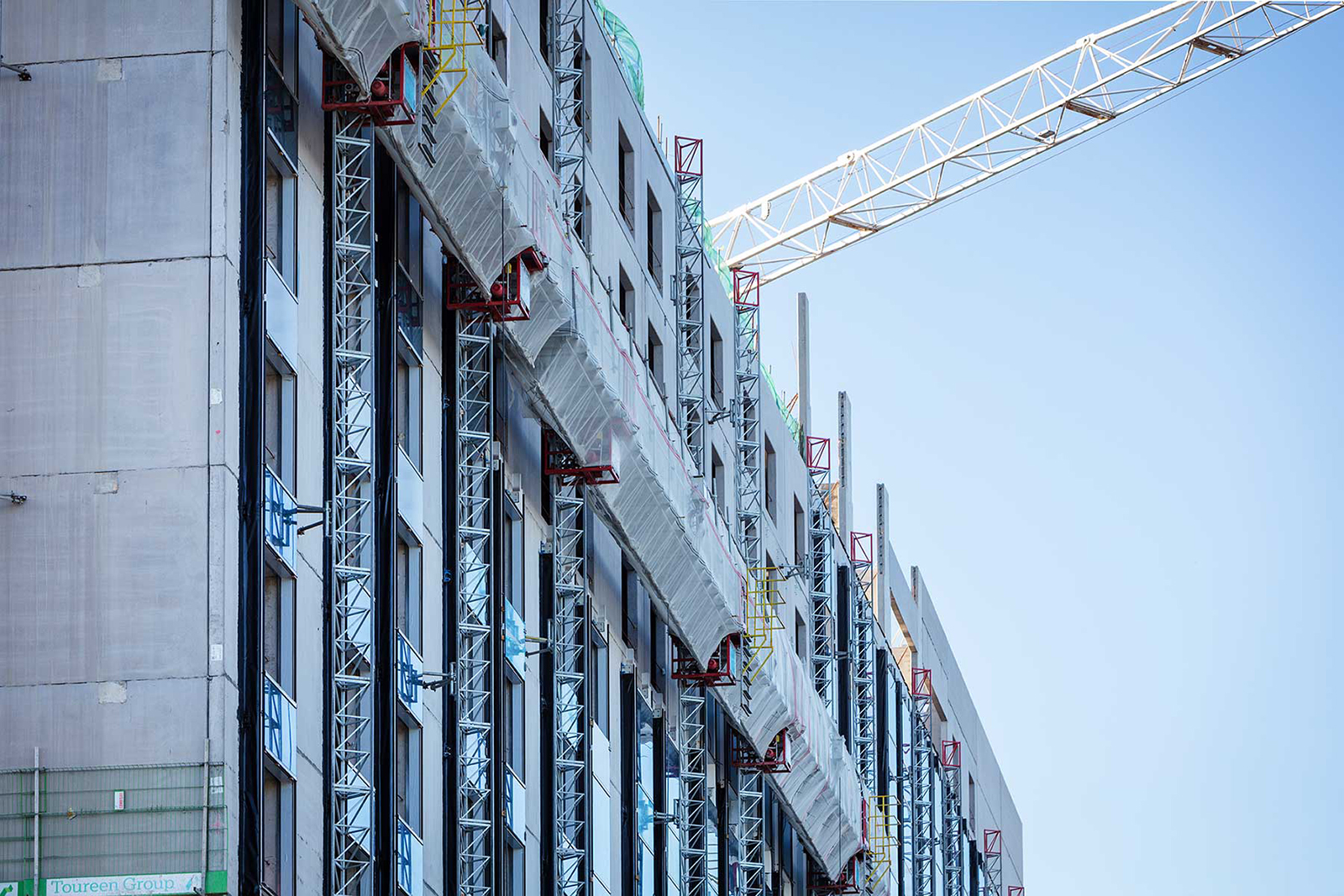
The guest-room package being delivered for the 412-room Sofitel Dublin Airport Hotel provides a practical example of this direction. The selected VDA Etheos platform is a cloud-based Guest Room Management System designed to integrate room access, temperature control, lighting and automation. Its architecture includes local room controllers, occupancy sensors and guest-facing control panels, together with interfaces for the Property Management System, HVAC and wider building controls. The platform is also designed to support mobile applications and voice-control solutions.
For the operator, the system provides central visibility across the property. Room status, occupancy and environmental settings can be monitored, while configurations can be adjusted and faults investigated. For the guest, however, the ambition should be much simpler: a room that is comfortable and easy to operate.
This distinction matters. Operational complexity can be useful behind the scenes, but it should not be transferred to the bedside.
Energy is now part of the guest-experience discussion
The development of connected room controls is not being driven by convenience alone.
Hotels operate continuously, and heating, cooling, lighting and hot-water systems account for significant energy use. Occupancy-based controls can reduce HVAC and lighting use when rooms are empty, while central monitoring can help operators identify waste, faults and unusual patterns. A 2016 study using the US Department of Energy’s Asset Scoring Tool found that occupancy-based guest-room controls could reduce HVAC energy use by 10 to 30 per cent, although actual savings will depend on the hotel, climate, systems and operating strategy.
Initially, many energy initiatives were framed primarily around environmental performance. That remains important, but energy costs and security of supply are now increasingly prominent concerns.
The challenge is to make savings without asking the guest to accept a lesser experience. A room that allows its temperature to drift excessively while empty may save energy, but those savings are undermined if it takes too long to become comfortable when the guest returns.
Intelligent controls should therefore manage energy more precisely, not simply use less of it. In luxury hospitality, efficiency and comfort cannot be treated as competing objectives.
AI is coming, but automation is already here
There is currently no shortage of claims about AI transforming hospitality. Some are credible; others appear to place an AI label on functions already delivered through sensors, software rules and conventional automation.
Most intelligent hotel rooms do not yet need artificial intelligence to determine that an unoccupied room can reduce its cooling or that a “welcome” setting should activate when a guest arrives. These are automated responses based on defined conditions.
AI may eventually add a more predictive layer. It could help systems anticipate occupancy, learn operating patterns, diagnose faults and make more sophisticated energy decisions. Research is already examining how AI and machine learning can improve HVAC control and identify building-system problems.
However, hotel operators should be careful not to begin with AI as the objective. The priority should be a room that works reliably. Adding intelligence to systems that are poorly integrated or difficult to operate will not solve the underlying problem.
Where should hotel operators begin?
With so many technologies competing for attention, the temptation is to assemble a hotel room around the latest products and features. But more technology does not automatically create a better experience.
Operators should begin by defining their priorities, then choose the systems that genuinely support them. Which room functions should be personalised? Which should happen automatically? What should remain under direct guest control? What must continue operating if the internet, cloud platform or another connected service becomes unavailable?
Before introducing new room technology, operators should also assess whether the hotel’s underlying infrastructure can support it. Power capacity, network coverage, cabling, containment, cooling, backup power and data resilience may all need to be reviewed. In older hotels, legacy systems, restricted service spaces and the need to remain operational can make integration more complex, meaning a phased programme or pilot rooms may be more practical than a full rollout.
The operational implications deserve equal attention. What information will help hotel staff manage rooms more efficiently? Which areas of energy use should be monitored? Who will maintain the controls, software and network? What are the ongoing licence, cloud-service, maintenance and upgrade costs? Who will manage cybersecurity and data protection? Can individual components be upgraded without replacing the whole system?
Most importantly, the proposed experience should be tested from the perspective of a guest entering the room for the first time.
The technology behind a luxury hotel room will continue to become more sophisticated. The interface presented to the guest should become simpler.
The future of the five-star room may involve more sensors, more connected systems and eventually more artificial intelligence. But the measure of success will not be how much technology the room contains. It will be how little effort the guest has to make.
Next Step
Planning a new hotel or upgrading an existing property?
Contact Update Group to discuss how building services, controls and infrastructure can support a more intuitive guest experience, stronger energy performance and long-term resilience.
Related
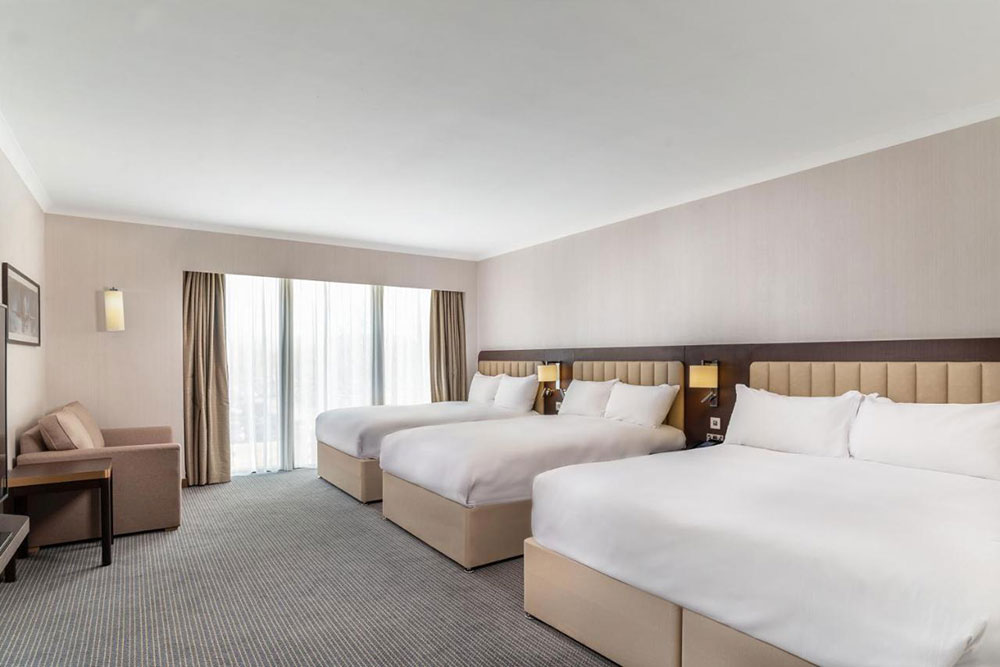
Selected Update Group hotel projects, completed and in progress.

UK
Dublin

Grand Cayman